
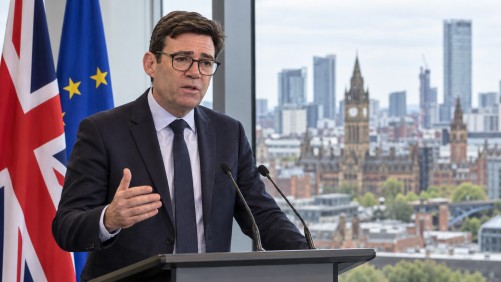
UK Prime Minister Andy Burnham has urged the government to engage in serious discussions about strengthening the country’s relationship with the European Union, highlighting the need for improved economic growth, immigration management, and security cooperation. Speaking in Parliament, Burnham emphasized the significance of the upcoming summit in Brussels on November 20, viewing it as a critical opportunity to enhance cooperation and explore options for a closer relationship with the EU.
The summit is set to focus on key areas such as food and drink trade, youth mobility, and emissions trading, with the UK government hopeful that these agreements could deliver an economic boost of around £10 billion annually. Burnham stressed that while the immediate goal is to secure practical agreements at the summit, discussions should also consider the long-term relationship between the UK and EU.
Burnham was clear that the government does not intend to reverse the Brexit referendum result and ruled out the return of free movement in current negotiations. However, he advocated for better cooperation on migration and border security. Despite these intentions, negotiations face challenges, particularly concerning the proposed youth mobility scheme, with ongoing debates about eligibility, participation limits, and university tuition fees.
Another potential hurdle is the EU’s “Made in Europe” initiative, designed to bolster European manufacturing in strategic sectors like renewable energy and electric vehicles. This has raised concerns among British manufacturers about potential restrictions on UK-made components in European supply chains. Burnham acknowledged these risks, urging both parties to seek mutually beneficial arrangements, especially in light of competition from Chinese exports.
Additionally, the government is contending with questions about Russian interference in the 2016 Brexit referendum. Burnham noted attempts by Russian actors to meddle in British elections, though no evidence was presented to suggest these actions affected the referendum’s outcome. The government has reiterated its commitment to respecting the vote’s result.
The November summit is anticipated to be a pivotal test of the UK’s and EU’s ability to rebuild trust and forge agreements on shared economic and political priorities. While immediate progress is feasible, significant disagreements could pose challenges to establishing a closer long-term partnership between the two sides.