
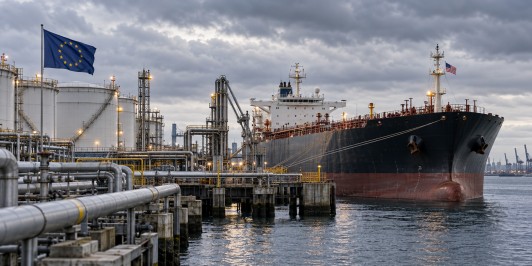
The European Union has raised concerns regarding the potential repercussions of a diesel export ban proposed by US President Donald Trump. This measure, intended to alleviate domestic fuel shortages and reduce high pump prices in the United States, could inadvertently disrupt both US and European fuel markets, the EU warns.
European officials and energy market analysts caution that restricting US diesel exports could tighten global supply chains and escalate fuel prices worldwide. Europe, having increased its reliance on US diesel imports due to decreased supplies from the Middle East and Russia, could face significant impacts from any such export restrictions. The US currently plays a critical role in supplementing Europe’s diesel needs, making any disruption potentially problematic.
The European Commission has emphasized the importance of international consultation before implementing measures that could have far-reaching consequences. While Europe might not face an immediate shortage due to its domestic refining capabilities and strategic reserves, a prolonged reduction in US diesel exports could force European nations to seek alternative sources from regions like the Middle East and India, thus intensifying competition and increasing costs.
The United Kingdom, in particular, could encounter heightened pressure due to its dependency on imported refined fuel and limited refining capacity. Reduced US diesel supplies could lead to rising costs in sectors such as agriculture, logistics, and road transport, making the UK more vulnerable to fluctuating international fuel prices.
Diesel prices have already surged across several European markets amid refining disruptions in the Gulf and Russia. An export ban by the US could further strain global markets and increase competition for the remaining supplies. The intended relief for American consumers could thus result in broader international economic impacts, highlighting the interconnected nature of global fuel supply chains.