
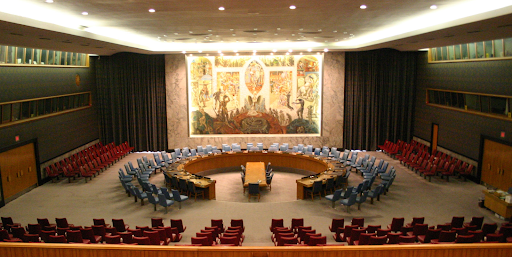
The United Nations Security Council has rolled the dice on a high-stakes strategy for Gaza, adopting a resolution that employs a classic “carrot and stick” approach, yet both offers have been swatted away by the primary antagonists. The resolution, drafted by the United States and modeled on President Trump’s 20-point vision, was designed to force a compromise. It dangles the “carrot” of a pathway to statehood to entice the Palestinians, while wielding the “stick” of an “International Stabilization Force” (ISF) to forcibly demilitarize the strip. While the resolution passed the vote on Monday, the core conflict at the heart of this strategy—the mutual rejection of these terms—threatens to render the entire document a dead letter.
The political “carrot” was essential for the resolution’s survival in the chamber. Diplomats worked tirelessly to include the conditional statehood clause, primarily to secure the support of the Palestinian Authority and to ward off a potential Russian veto. This diplomatic maneuvering was successful in New York, but it failed to account for the intransigence of the Israeli leadership. Prime Minister Benjamin Netanyahu immediately issued a public rebuke of the plan, reiterating his absolute opposition to the establishment of a Palestinian state. By rejecting the primary incentive offered to the Palestinians, Israel has effectively undercut the political legitimacy of the US proposal.
Conversely, the security “stick” intended to pacify the region has been met with equal defiance by Hamas. The resolution provides a mandate for the ISF to decommission all weaponry and dismantle the militant infrastructure that permeates Gaza. The US views this as a non-negotiable requirement for peace. However, Hamas has framed this intervention as a hostile takeover, labeling it “international guardianship.” Their statement was unequivocal: they “will not disarm.” This promise of resistance suggests that any international force deployed under this mandate will not be keeping the peace, but rather fighting a war to establish it.
In the face of this dual rejection, the United States has maintained a posture of triumph. Ambassador Mike Waltz lauded the resolution as the mechanism that will finally “dismantle Hamas’ grip” and allow for a “prosperous and secure” future for Gazans. President Trump joined the chorus of approval, calling the vote “historic” and announcing his leadership of a new “Board of Peace” aimed at reconstruction. The US narrative is one of decisive action and solution-building, projecting a confidence that belies the utter lack of buy-in from the combatants who actually control the weapons and the territory.
The skepticism of the broader international community was palpable during the vote, particularly through the abstentions of Russia and China. These major powers refused to endorse the plan, protesting the fact that it sidelines the UN in favor of a US-dominated initiative. Russian Ambassador Vasily Nebenzya warned that the Security Council was ceding “complete control” to Washington, creating a dangerous precedent. As it stands, the plan is a US project with no unified Security Council backing, facing a wall of rejection from Hamas and deep resistance from Israel, making its implementation a daunting, if not impossible, prospect.