
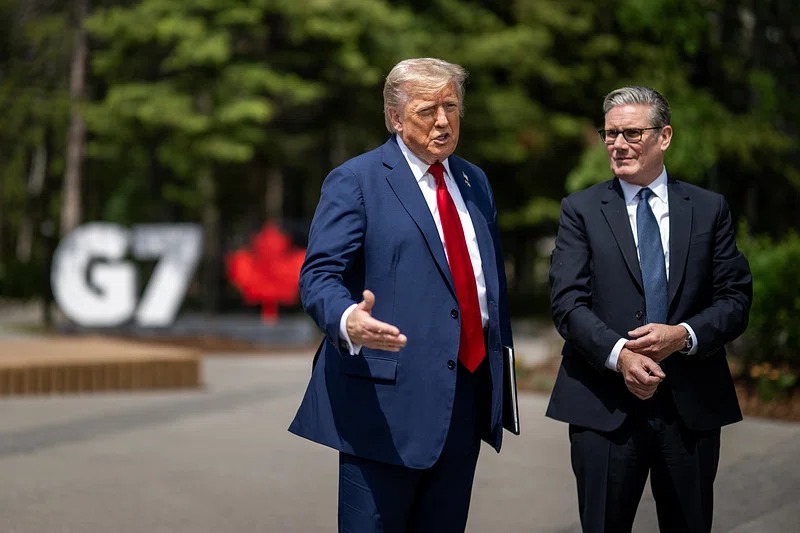
For much of the post-war period, Britain’s participation in American-led military operations was essentially unconditional — a function of the special relationship, of shared values, and of a strategic calculation that being close to America was always in Britain’s interest. The Iran conflict suggests that those conditions may have changed.
The governing Labour Party’s reluctance to support the American-Israeli operations against Iran was not a passing hesitation. It reflected deep-seated convictions within the party about the ethics of military intervention, the wisdom of close alignment with American foreign policy, and the lessons of the Iraq War. Those convictions did not dissolve when Labour took office.
The prime minister’s initial decision to withhold cooperation was a reflection of those convictions — and of the political reality that he governed a party, not just a country. Managing that party required a level of caution about military involvement that previous British governments, operating in different political environments, had not needed to exercise.
The cost of that caution was made visible in the most public possible way by the American president. But the underlying question it raised — whether Britain’s alliance with the United States could remain as close and as unconditional as it had historically been, given the changed political landscape — was one that would outlast the immediate episode.
Whether that question had a satisfactory answer — one that preserved both the alliance and the democratic integrity of British decision-making — was something that British politicians and strategists would be grappling with for years.