
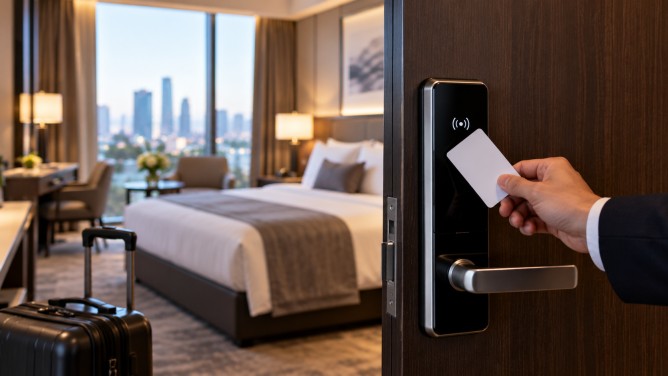
Hotels are increasingly shifting towards digital access systems to streamline front-desk operations, enhance guest convenience, and bolster room security. Unlike traditional key-card locks, smart lock platforms utilize a combination of RFID credentials, PINs, QR codes, and Bluetooth-based digital keys, offering a more integrated approach to access control.
Conventional systems typically rely on physical cards encoded at the reception, necessitating staff involvement for room changes, extended stays, or card replacements. These magnetic-stripe cards are susceptible to physical damage and demagnetization, adding to operational costs due to the need for maintaining a stock of replacement cards. In contrast, modern smart locks deploy centralized software to manage much of this process, issuing temporary digital credentials, monitoring access activity, and managing staff permissions. They can also automatically expire guest access post-checkout and support remote or contactless check-in, reducing the need for guests to collect a physical key at the front desk.
YOUNUO IET specializes in hotel access hardware that supports diverse digital access models. Their JoyInn-powered solution features QR-code and dynamic-PIN entry, as well as web-based H5 digital credentials sent to guests’ mobile devices. Additionally, the company offers hardware compatible with the TTLock and TTHotel software ecosystems for properties utilizing Bluetooth eKeys. The two product families operate on distinct software platforms and account structures, requiring hotels to choose the ecosystem that aligns with their operational preferences. Both lines offer customization through OEM and ODM services, and battery-status monitoring aids maintenance teams in identifying locks needing attention.
Integrated access platforms extend beyond individual guest rooms, connecting room locks to other aspects of a property’s infrastructure. Depending on the setup, this can include elevator controls, common-area doors, energy-saving switches, and wireless gateways. Integration with PMS and API can further automate credential creation when guest check-in details are transferred to the access-control platform. This connectivity allows a single credential to authorize access to a guest’s room and shared facilities, coordinating room access with energy-management functions, while also ensuring reliable operation through rigorous testing of check-in, checkout, renewal, and lost-card procedures.
For hotel operators, the decision to adopt smart systems involves more than the initial lock cost. While traditional card systems are familiar and straightforward, they rely heavily on physical credentials and front-desk administration. Conversely, smart systems demand greater attention to software, integration, and system selection, but they diminish the need for manual key handling and offer more adaptable credential management. YOUNUO IET provides comprehensive hotel lock systems for properties exploring RFID, QR/PIN, and Bluetooth eKey access technologies.
Legal Disclaimer:
The information contained in this article has been provided by independent third-party contributors, clients, or content partners. We do not independently verify the accuracy, completeness, legality, ownership, licensing, or reliability of submitted content, including text, images, videos, trademarks, or other media materials. The submitting party is solely responsible for ensuring that all content, including images and media assets, complies with applicable copyright, trademark, licensing, and intellectual property laws. We disclaim liability for any unauthorized use of copyrighted or proprietary materials by third parties. If you believe that any content published on this platform infringes your intellectual property rights, kindly contact the author above for prompt review and resolution.