
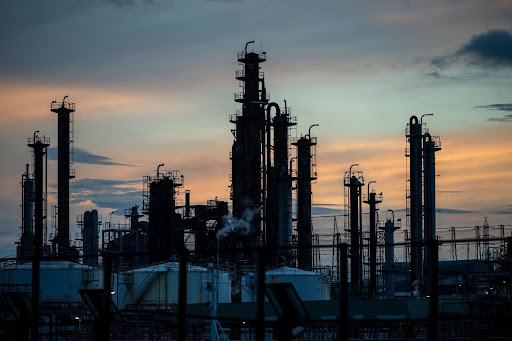
The return of $100 oil is generating sharply different reactions from traders, analysts, and governments, but all agree that the Middle East conflict has fundamentally altered the global energy market’s short-term trajectory. Brent crude rose around 6% Thursday to nearly $98, having briefly touched $100.29, as Iran continued its campaign against Gulf energy infrastructure. From Wall Street to Riyadh, the implications are being assessed with growing urgency.
Traders focused on the physical supply disruptions — the closure of the Strait of Hormuz, the shutting of Iraqi oil ports, and the evacuation of Oman’s Mina Al Fahal terminal. Three crew members aboard the Thai-flagged Mayuree Naree were reported trapped after their vessel was struck near the strait. Bahrain placed residents under shelter-in-place orders as fuel tanks burned.
Goldman Sachs raised its Q4 2026 Brent forecast to $71 per barrel from $66, reflecting expectations of a prolonged disruption. Deutsche Bank’s Jim Reid warned of the risk of a broader stagflationary shock if the conflict drags on. Iran’s military raised the stakes further by warning of $200-per-barrel oil, framing the crisis as a consequence of US foreign policy.
Governments moved to release emergency reserves on an unprecedented scale. The IEA coordinated a 400-million-barrel release from 32 member nations, while the US announced a 172-million-barrel Strategic Petroleum Reserve drawdown. Energy Secretary Chris Wright accused Iran of deliberately endangering the energy security of the United States and allied nations.
Saudi Aramco warned of catastrophic market consequences if the Strait of Hormuz blockade continues. West Texas Intermediate gained 8.6% to $94.75. Japan’s Nikkei fell 1.6%, South Korea’s Kospi lost 1.2%, and European natural gas added 7.7%.