
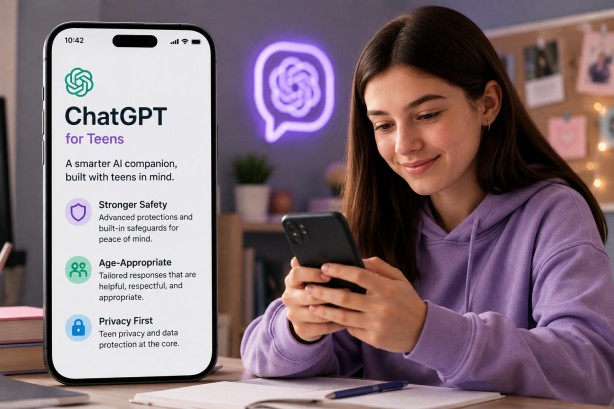
OpenAI has introduced a tailored version of its ChatGPT aimed at teenagers between the ages of 13 and 17, featuring enhanced safety protocols and protections appropriate for their age group. This specialized version of the AI is crafted to offer a safer digital environment by limiting exposure to content related to self-harm, suicide, and sexual or romantic topics, which is especially important as teens increasingly use AI for educational purposes, everyday inquiries, and companionship.
To promote healthier interactions with AI, the new version allows parents to link their accounts, enabling them to set designated quiet hours during which their teens are unable to access ChatGPT. In certain scenarios deemed high-risk, parents could also receive alerts to ensure their children’s safety. Furthermore, OpenAI is implementing additional precautions around sensitive issues like eating disorders, restricting access to potentially harmful information, and guiding users toward offline support resources when necessary.
Addressing concerns about emotional dependencies on AI, OpenAI has designed the teen version to avoid creating the impression that the chatbot has personal feelings, consciousness, or emotions. This move is part of a broader strategy to prevent teenagers from developing unhealthy emotional ties with the AI.
The company employs age-assurance technology to discern whether a user is under 18, based on their interaction patterns with the service. Those identified as minors may be transitioned into the teen-specific version, which includes these additional layers of protection.
In an educational context, ChatGPT for Teens is crafted to encourage critical thinking and problem-solving rather than simply delivering answers or completing tasks for students. This educational approach aims to position AI as a supportive tool that aids in learning rather than replacing the learning process itself.